Everything You Need to Know About Altitude Sickness in Peru
So you’re thinking of going to Peru, but feeling a little nervous about the possibility of getting altitude sickness?
Don’t worry! You are not alone. I think this plays on most people’s minds, even if they don’t say it out loud.
After visiting the Cusco and Machu Picchu area twice and going on two different multi-day treks through Peru, I’ve had quite a bit of exposure to hiking and explore at high elevation but even the experience, I still get nervous.
I’m writing this guide to hopefully help you feel a bit more confident about preparing to visit the high elevation areas of Peru and tackling altitude sickness if it does end up presenting itself to you.

Disclaimer: This post contains affiliate links that may earn us a small commission should you decide to click through and make a valid purchase (at no extra cost to you). Thanks so much for your support!
Altitude Sickness in Peru
What is Altitude Sickness?
Altitude sickness happens when your body struggles to adjust to being at a higher elevation. The reason for this struggle, is that there is less oxygen available the higher you go.
Even though you are breathing normally, you are technically getting absorbing less oxygen into your body that you would if you were at sea level.
Where Can You Experience Altitude Sickness in Peru?
Peru has some incredible destinations, but many of them sit at a surprisingly high altitude. Depending on where you’re travelling, you could be spending time anywhere from sea level to over 5,000 metres above sea level.
Here’s a look at some of the places with higher altitudes of some of the most popular destinations in Peru.
| Destination | Approximate altitude |
|---|---|
| Cusco | 3,400m / 11,152 ft |
| Sacred Valley | 2,980m / 9776 ft |
| Machu Picchu | 2,430m / 7,972 ft |
| Rainbow Mountain | 5,200m / 17060 ft |
| Humantay Lake | 4,200m / 13,779 ft |
| Puno (Lake Titicaca) | 3,800m / 12467 ft |
| Arequipa | 2,335m / 7,660 ft |

What Are the Symptoms of Altitude Sickness?
There are a variety of potential symptoms that come with altitude sickness. You won’t necessarily get all of these at once. You could just get one of two or you could experience all at once which I can’t imagine would be very fun so fingers crossed that doesn’t happen!
- Headache
- Nausea
- Dizziness
- Fatigue
- Shortness of breath
- Difficulty sleeping
- Loss of appetite
My Experience with Altitude Sickness in Peru
I’ve been to Peru twice now and didn’t take any medication for altitude sickness either time and luckily I was pretty much fine.
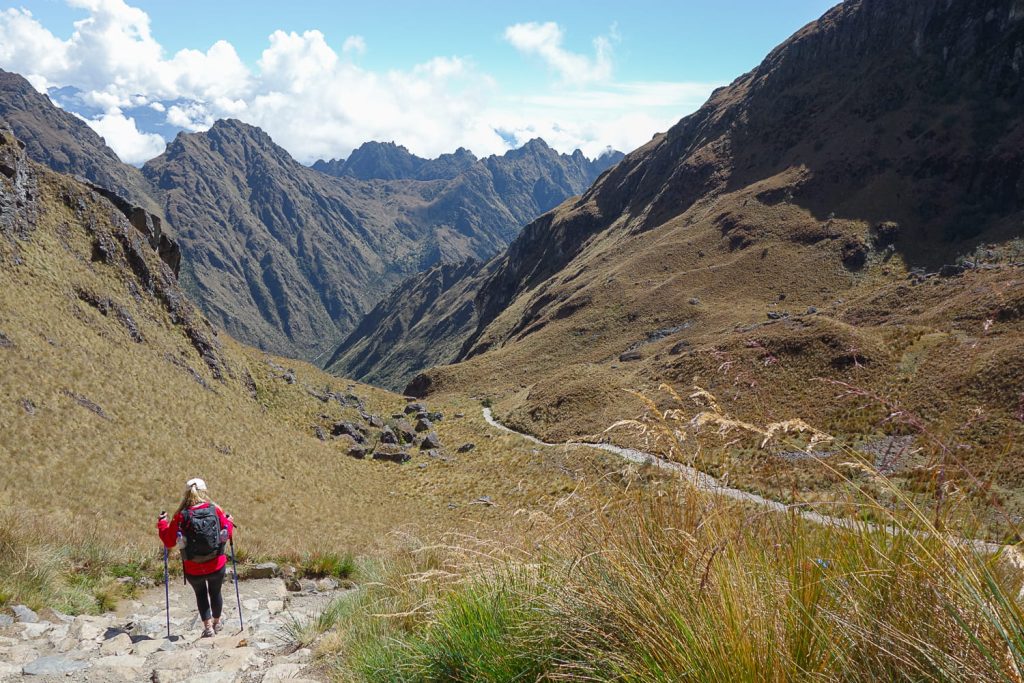
My First Trip to Peru (Inca Trail)
The first time I went to Peru, I did the Inca Trail and I was absolutely terrified about getting altitude sickness. The Inca Trail goes up to a maximum elevation of 4,215 meters (13,828 feet) at Dead Women’s Pass. My husband Dave and I spent around 3 days in Cusco beforehand, acclimatising and drinking Coca Tea which I think definitely helped.
I remember all of the uphill on the Inca Trail being slow-going because of the high elevation. I felt like I couldn’t get enough air into my lungs. Then when it came time to hike up to Dead Women’s Pass, I took it very slow and stopped to breathe any time I felt like I needed to.
I was 24 on this trip and I’m pretty sure age can factor into whether or not the altitude could affect you and how bad it could be.
My Second Trip to Peru (Salkantay Trek and Rainbow Mountain)
When I went back to Peru a second time I was 33 years old and an opportunity came up for me to co-host a group girls trip to do the Salkantay Trek. This time I was much more exposed to high elevation and I went up to levels of elevation that I had never reached before on the Salkantay Trek and also on Rainbow Mountain.
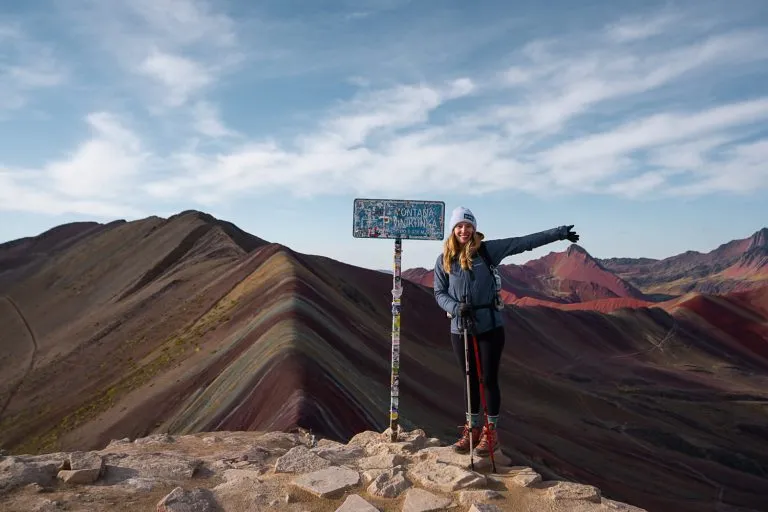
The Salkantay Trek goes up to 4,600m (15,090ft) at Salkantay Pass and Rainbow Mountain gets up to 5,200 meters (17,060 feet).
On arrival to Peru, I stayed in Cusco for 3 days again to acclimatise, only this time I was stuck with a HORRIBLE headache for the first couple of days. I’m sure that this was because of the altitude but I also suffer with pretty bad sinusitis which I didn’t have the first time I went to Peru so I’m sure this was also probably a factor.

Then it was time to hike the Salkantay, and I specifically remember feeling it getting harder to breathe as our little shuttle bus got higher and higher to the beginning of the trailhead. I don’t know if this was all in my head or not though.
On the actual trek, I felt Salkantay Pass extremely hard and had to keep stopping to breathe. We were also given what the guides call “Condor Pee” which is a botanical concoction that you breathe in to help open your lungs. It works wonders!
That same day on the trek, I started having a very unhappy tummy (I won’t go into details), which lasted a couple of days but definitely started improving as we hiked back down the mountain. I’m convinced that this was definitely a symptom of altitude sickness and afterwards a lot of the other girls confirmed that they were also feeling the same symptoms (even though they were all taking Diamox – an altitude sickness medication).
I survived the rest of Salkantay Trek with no other issues. Then I did Rainbow Mountain and oh my goodness!
Rainbow Mountain is even higher than the Salkantay and I definitely felt it. I did it as a sunrise tour the day after finishing the Salkantay Trek so didn’t get much sleep the night before which I think probably contributed to my struggle.
I didn’t feel sick or anything but I really struggled with breathing on this trail. I took it super super slow and had to stop continuously to rest. One of my friends felt really nauseas at the highest point of the trail. She had some “Condor Pee” and then slowly started feeling better. She was also going quite a bit faster than me on the trail with less rest stops so I do wonder if this contributed.
How to Prevent Altitude Sickness in Peru
There are many different ways to try to stop yourself from getting altitude sickness in Peru. These steps can help reduce your risk, but they don’t guarantee you from not getting any symptoms at all.
- Go to your doctor before you leave home and let them know that you are going somewhere with high altitude. They can assess whether altitude sickness medication, such as Diamox (acetazolamide), is suitable for you and explain how and when to take it.
- Try coca tea while you’re in Peru. You’ll see coca tea offered in hotels and restaurants throughout Cusco, and it’s traditionally used to help with altitude related discomfort. It’s not a proven treatment or preventative, though, so don’t rely on it to protect you from altitude sickness.
- Acclimatise for a few days before jumping into hiking. I recommend spending about 3 days in Cusco or wherever else you are visiting and taking it easy before doing any strenuous activities. Your body needs time to adjust to the lower oxygen levels.
Doing a Sacred Valley Tour during your time acclimating in Cusco is the perfect way to spend your time. - Avoid alcohol. I’d avoid drinking alcohol during your first couple of days at altitude, as it can make it harder to sleep and may worsen how you’re feeling.
- Drink plenty of water. Staying hydrated is important when travelling at altitude. Make sure you’re drinking regularly throughout the day, especially if you’re hiking or spending time outdoors.
- Relax and don’t push yourself too hard. Take it easy while you are acclimating and then if you are doing any hiking, go slow and take plenty of breaks to give your body a chance to absorb enough oxygen. I found this really helped me while trekking in Peru.


What to Do If You Get Altitude Sickness
If you start feeling sick while travelling around Peru, don’t try to push through it because this will likely make your symptoms worse.

Altitude sickness can affect anyone, regardless of how fit or active you are or your age. If you think you are experiencing mild altitude sickness, here’s a few things you can do:
- Take a break and rest: If you’ve been hiking or exploring, stop and give your body a chance to recover. Avoid strenuous activities until you’re feeling better.
- Don’t travel to a higher altitude. If you’re already experiencing symptoms, avoid going any higher until they’ve completely settled. Continuing to climb can make things worse.
- Consider heading to a lower altitude. If your symptoms aren’t improving, or they’re getting worse, descending to a lower elevation is important. Even dropping a few hundred metres can sometimes make a difference.
- Stay hydrated. Keep drinking water throughout the day, particularly if you’ve been hiking or spending time outdoors.
- Get medical advice. If you’re feeling unwell, speak to a healthcare professional. They can assess your symptoms and advise you on the best course of action. My mum was feeling pretty unwell recently when she was visiting Cusco and the doctor prescribed her oxygen which made her feel much better.
Never take altitude sickness symptoms lightly. Altitude sickness can sometimes become much more serious. If you experience a severe or worsening headache, difficulty walking or keeping your balance, confusion, or difficulty breathing while resting, seek emergency medical help immediately.
Please also note that I am not a doctor or medical professional so if you are in any doubt at all, please visit a doctor! It’s always better to have piece of mind when you are in another country.
Should You Take Altitude Sickness Medication?
My best advice for this one is to visit your doctor or travel doctor back in your home country before you go on your trip. Tell them all the places you are visiting in Peru and they’ll help you to decide whether altitude sickness medication is going to be right for you.
It can definitely help but some altitude sickness medication can also have some funny side effects. For example, Diamox seems to make your skin feel tingly, or so I was told.
Does Coca Tea Help With Altitude Sickness?
Coca Tea is offered pretty much everywhere in Peru, especially in places that are at high altitude like Cusco.
It contain natural compounds that are traditionally believed to help with some of the symptoms associated with altitude sickness, such as headaches, nausea and fatigue.
However, there’s limited scientific evidence to show that coca tea actually prevents or treats altitude sickness. While some people feel it helps them, it won’t speed up the acclimatisation process or protect you from more serious symptoms.
It’s definitely worth trying though! I swear it made me feel better but that was probably also some sort of placebo effect. haha
🍵 Note: One thing to be aware of: Coca tea contains naturally occurring cocaine alkaloids, which can cause a positive result on a drug test. It’s also worth checking the rules around carrying coca products when travelling internationally, as they aren’t legal everywhere.
How Long Does It Take to Acclimatise to the Altitude in Peru?
The length of time it takes to acclimate depends on a number of things including how quickly you ascend and whether you’ve recently spent time at a high elevation. It can also depend on the person as everyone experiences altitude sickness differently.
The minimum recommendation of amount of time that you should spend acclimating is 2 days, but it can take around 3 to 5 days to fully feel comfortable at an elevation that you are not used to.
If you are visiting Cusco, I recommend hanging out in the city (or the Sacred Valley) for at least 2 days before doing any big hiking like Humantay Lake or Rainbow Mountain or high altitude trips.
Visiting Peru? You might find these other guides helpful:
- How to Get to Huacachina from Lima
- How to Spend a Magical 3 Days in Cusco
- Unique Places to Stay in Cusco
- Best Day Trips From Cusco, Peru
- Is Rainbow Mountain Worth It? What I’d Do Differently After Visiting
- Best Things to do in Paracas, Peru
- An Incredible Lima 1 Day Itinerary
- Bucket List Things to Do in Peru
- Is Huacachina Worth Visiting: My Honest Option
- Is Lima Worth Visiting: My Honest Review
- Are the Nazca Lines Worth Visiting?
- Where to Stay in Lima (I found the best place ever)!
- Everything You Need to Know About Machu Picchu
- Rainbow Mountain or Humantay Lake? How to Choose
- Best Time to Visit Peru
📌 Like it? Pin it!